







What is Measles?
Measles is a highly contagious respiratory illness caused by a virus in the paramyxovirus family. Although it is often characterized by its distinctive red, blotchy rash, measles is a serious airborne disease that affects the entire body and can lead to severe, life-threatening complications.
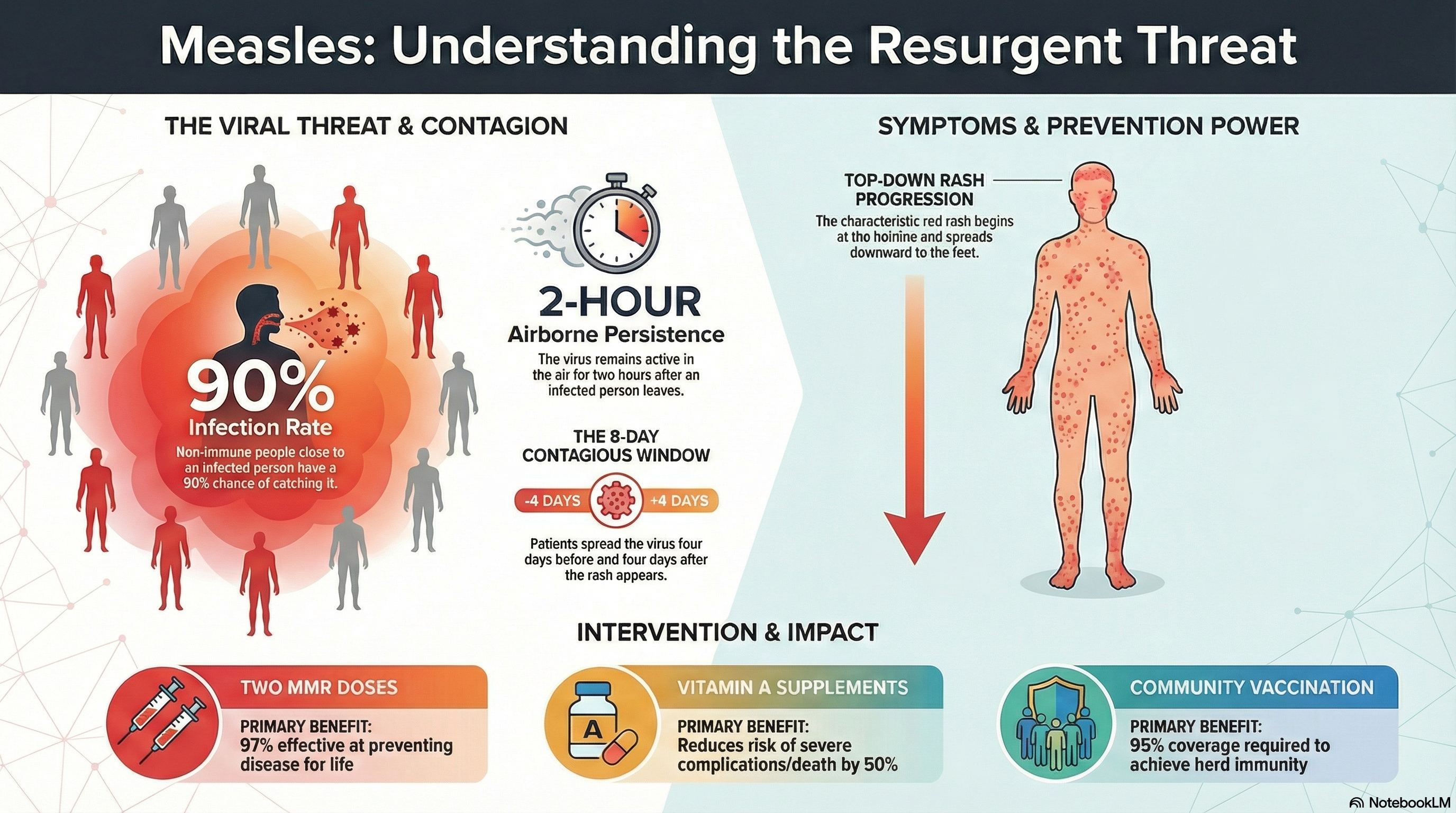
As of early 2026, many regions—including the United States, Europe, and Asia—are experiencing a significant resurgence of measles. It is one of the most infectious diseases known; if one person is infected, up to 90% of the people close to them who are not immune will also catch it. The virus is so potent that it can remain active in the air or on surfaces for up to two hours after an infected person has left the area.
Causes of Measles
Measles is caused by a virus that lives in the nose and throat mucus of an infected person. It is an airborne disease, meaning it spreads through the air when an infected person talks, coughs, or sneezes.
Transmission occurs through: Respiratory Droplets: Small drops of fluid released during coughing or sneezing. Aerosolized Particles: The virus can hang in the air of an enclosed space for a long period. Contagious Window: An infected person can spread the virus for about four days before the rash appears and for four days after it develops.
The disease is especially dangerous because it can be transmitted before a person even knows they have the characteristic measles rash.
Symptoms of Measles
Symptoms generally appear 7 to 14 days after exposure to the virus. The illness typically progresses through a series of stages:
The Early Stage (Prodrome): This stage lasts 2 to 4 days and is marked by a high fever (often reaching 104°F to 105°F), a persistent cough, a runny nose (coryza), and red, watery eyes (conjunctivitis).
Koplik Spots: Approximately 1 to 2 days before the rash appears, tiny white spots (similar to grains of salt) may develop inside the mouth on the lining of the cheek. These are a unique "pathognomonic" sign of measles.
The Measles Rash: About 3 to 5 days after the initial symptoms begin, the rash breaks out. It usually starts at the hairline or behind the ears and spreads downward over the neck, trunk, arms, and finally the legs and feet.
Diagnosis of Measles
Healthcare providers usually suspect measles based on the patient's symptoms, particularly the combination of high fever, cough, and the characteristic rash.
Diagnostic tools include: Physical Examination: Identifying the downward spread of the rash and searching for Koplik spots in the mouth. Laboratory Testing: Confirmation is typically made through a blood test to look for specific antibodies (IgM) or by using a throat or nose swab (PCR) to detect the virus itself. Medical History: Your doctor will ask about your vaccination status and any recent travel or exposure to known outbreaks.
Important Note: If you suspect you have measles, call your doctor’s office before visiting. This allows them to take precautions to prevent you from infecting other patients in the waiting room.
Treatment of Measles
There is no specific antiviral medication to cure measles. Treatment focuses on relieving symptoms and preventing severe complications.
Standard medical care includes: Supportive Care: Staying hydrated with plenty of fluids and using fever reducers (such as acetaminophen) to manage high temperatures. Vitamin A: The World Health Organization (WHO) recommends Vitamin A supplements for children diagnosed with measles. High doses of Vitamin A have been shown to reduce the risk of severe complications and death by up to 50%. Antibiotics: These do not treat the measles virus itself but are prescribed if a patient develops secondary bacterial infections, such as ear infections or pneumonia.
Prevention of Measles
The only effective way to prevent measles is through vaccination. The Measles, Mumps, and Rubella (MMR) vaccine is safe and highly effective.
Vaccination Facts: Effectiveness: Two doses of the MMR vaccine are 97% effective at preventing the disease for life. Schedule: Children typically receive the first dose at 12–15 months and the second dose at 4–6 years. Herd Immunity: Because measles spreads so easily, at least 95% of a community must be vaccinated to prevent the virus from circulating and causing outbreaks. Immune Amnesia: Preventing measles also protects your long-term health. A measles infection can "erase" your immune system's memory of other diseases, leaving you vulnerable to other infections for months or even years after you recover.