







Headache disorders affect approximately 90% of people during their lifetime and are broadly classified into primary headaches (not caused by underlying medical conditions) and secondary headaches (due to underlying disorders)
What are Headaches?
Headaches are among the most common health complaints worldwide and can affect people of any age. They may cause pain in the head, face, scalp, or upper neck and range from mild discomfort to severe, disabling pain. While most headaches are harmless and temporary, some may indicate an underlying medical condition that requires attention. Understanding the causes, symptoms, diagnosis, treatment, and prevention of headaches can help people manage them more effectively and know when to seek medical care.
Types of Headaches
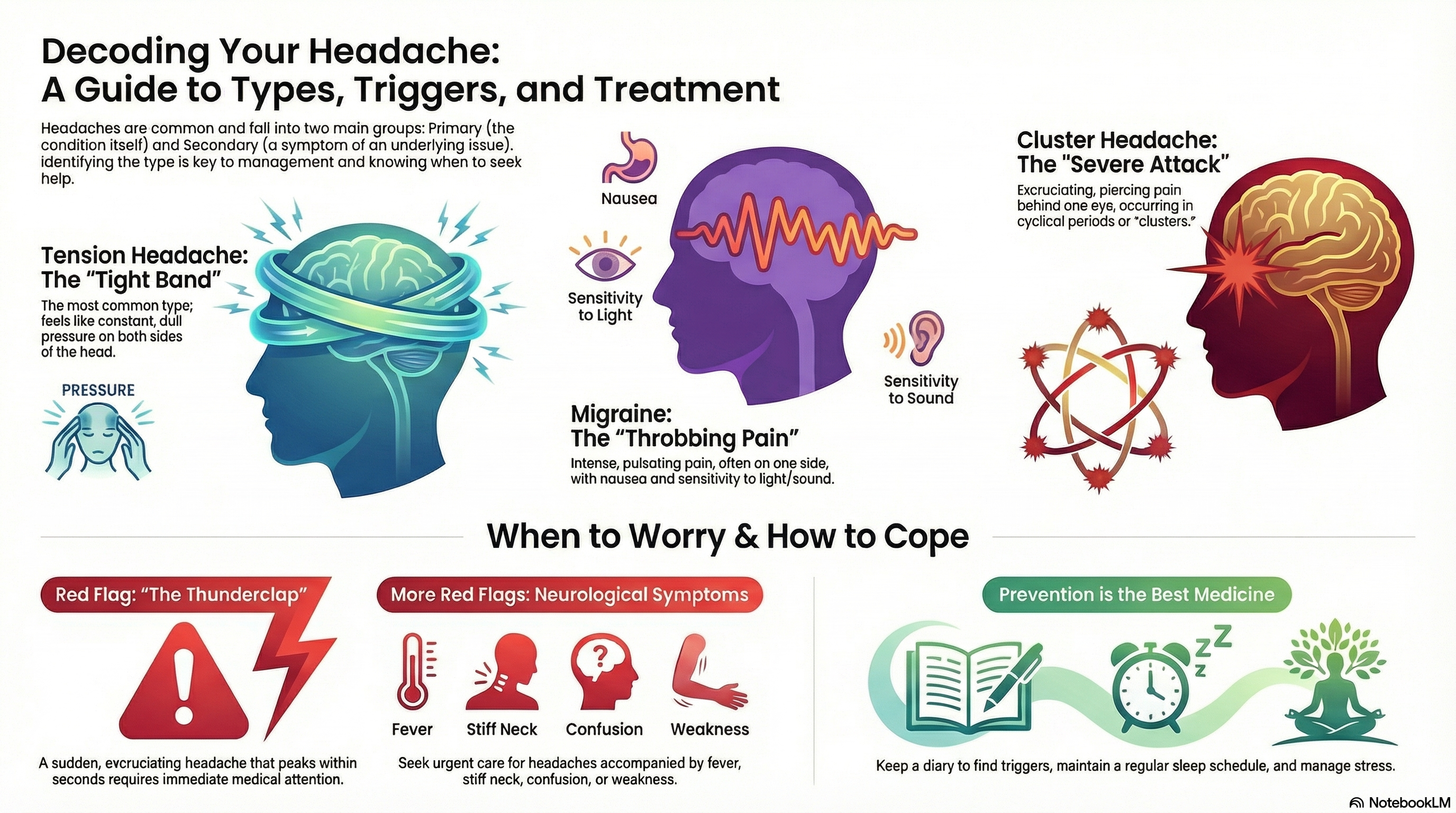
Headaches are broadly classified into primary headaches and secondary headaches. Primary headaches are not caused by another medical condition. Instead, they result from overactivity or dysfunction of pain-sensitive structures in the head, such as nerves, muscles, and blood vessels. Secondary headaches, on the other hand, occur as a symptom of an underlying health problem, such as infection, injury, or changes in blood pressure or brain pressure.
Primary Headaches
Tension-Type Headaches
Tension-type headaches are the most common form of headache. They are often described as a constant pressure, tightness, or squeezing sensation around the head, particularly across the forehead or at the back of the head and neck. The pain usually affects both sides of the head and is mild to moderate in intensity. Unlike migraines, tension headaches are not typically associated with nausea or vomiting and are not worsened by routine physical activity.
These headaches are commonly triggered by emotional stress, mental fatigue, poor posture, prolonged screen use, lack of sleep, dehydration, or skipped meals. Although uncomfortable, tension-type headaches usually respond well to rest, hydration, stress reduction, and occasional use of over-the-counter pain relievers.
Migraine Headaches
Migraine is a neurological condition that causes recurrent attacks of moderate to severe headache pain. Migraine pain is often throbbing or pulsating and usually affects one side of the head, although it can involve both sides. Attacks may last from several hours to several days if untreated and can significantly interfere with daily activities.
Migraines are commonly accompanied by nausea, vomiting, and heightened sensitivity to light, sound, smells, and sometimes touch. Physical activity often makes the pain worse. Some people experience an aura before or during a migraine attack, which may include visual disturbances such as flashing lights or zigzag patterns, numbness or tingling in the face or limbs, or difficulty speaking.
Common migraine triggers include hormonal changes, stress, irregular sleep patterns, dehydration, caffeine withdrawal, alcohol consumption, certain foods, strong sensory stimuli, and environmental changes such as weather shifts.
Cluster Headaches
Cluster headaches are rare but extremely painful. They cause sudden, intense burning or stabbing pain, typically located around or behind one eye or on one side of the face. The pain is always on the same side during an individual attack. It is often accompanied by redness or tearing of the eye, nasal congestion or a runny nose, facial sweating, or drooping of the eyelid.
Cluster headaches occur in patterns known as clusters, during which attacks happen daily, sometimes multiple times per day, for weeks or months, followed by periods of remission. Attacks often occur at the same time each day and frequently wake people from sleep. During an episode, individuals often feel restless and unable to lie still. Alcohol is a common trigger during active cluster periods.
Secondary Headaches
Secondary headaches are caused by an underlying medical condition and require treatment of the root cause for relief.
Dehydration headaches occur when the body loses too much fluid, leading to dull or throbbing head pain, often around the temples. These headaches are preventable by maintaining adequate hydration and limiting excessive alcohol or caffeine intake.
Sinus headaches result from inflammation or infection of the sinuses and are felt as deep pressure or pain in the forehead, cheeks, bridge of the nose, or around the eyes. The pain often worsens when bending forward and may be accompanied by nasal congestion, discharge, facial tenderness, or fever.
Medication-overuse headaches develop when pain-relief medications are taken too frequently over long periods. Instead of relieving pain, the medication causes headaches to return as it wears off, leading to frequent or daily symptoms.
Other causes of secondary headaches include head or neck injuries, infections such as meningitis, significant changes in blood pressure, problems related to pressure inside the skull, and, less commonly, severe conditions such as strokes or brain tumors. Although these causes are rare, they are medically essential and must be ruled out when warning signs are present.
Symptoms Associated With Headaches
Headache symptoms vary depending on the type and cause. Pain may be dull, pressure-like, throbbing, or sharp. Some headaches are accompanied by nausea, vomiting, sensitivity to light or sound, visual disturbances, nasal congestion, eye redness, neck stiffness, fever, or fatigue. Recognizing accompanying symptoms can help identify the headache type and guide treatment.
How to Diagnosis Headaches
To diagnose a headache, a doctor will ask detailed questions about the pain, including when it started, how often it occurs, how long it lasts, where it is located, and what triggers or relieves it. A physical and neurological examination is usually performed to check vision, reflexes, muscle strength, coordination, and neck movement.
Most people with common primary headaches do not require imaging tests. However, scans such as CT or MRI may be ordered if the headache is severe, sudden, worsening, different from usual patterns, or associated with concerning symptoms.
Warning Signs That Require Medical Attention
While most headaches are not dangerous, specific symptoms require urgent evaluation. These include a sudden and severe headache that reaches maximum intensity within seconds, headaches accompanied by fever and neck stiffness, confusion, weakness, difficulty speaking, vision loss, headaches following a head injury, or headaches that steadily worsen over time. New or unusual headaches after the age of fifty should also be assessed promptly.
Treatment Options to Treat Headaches
Treatment depends on the type, severity, and frequency of headaches. Mild headaches often improve with rest, hydration, and over-the-counter medications such as acetaminophen or ibuprofen. These should be used carefully, as excessive use can lead to rebound headaches.
For more severe or frequent headaches, especially migraines or cluster headaches, doctors may prescribe medications that stop attacks or reduce how often they occur. These may include migraine-specific drugs, preventive medications, or treatments targeting underlying causes.
Many people also benefit from non-medication approaches such as stress management, regular exercise, posture correction, adequate sleep, relaxation techniques, physical therapy, or complementary therapies like acupuncture or massage.
How to Prevent Headaches
Preventing headaches often involves identifying and managing personal triggers. Maintaining a healthy lifestyle with regular meals, sufficient sleep, proper hydration, and physical activity can reduce headache frequency. Managing stress through relaxation techniques, hobbies, or counselling is especially important, as stress is a common trigger across many headache types.
Keeping a headache diary can help track patterns, triggers, and responses to treatment. This information is valuable for both self-management and medical consultations.
Living With Headaches
Headaches are common, but they should not be ignored or dismissed as something you must simply endure. Most headaches can be effectively managed once their type and triggers are understood. Modern treatments have significantly improved outcomes, particularly for people with migraines and cluster headaches.
If headaches are frequent, severe, or interfere with daily life, seeking medical advice can lead to an accurate diagnosis and a tailored treatment plan that improves quality of life.