







What is Dehydration?
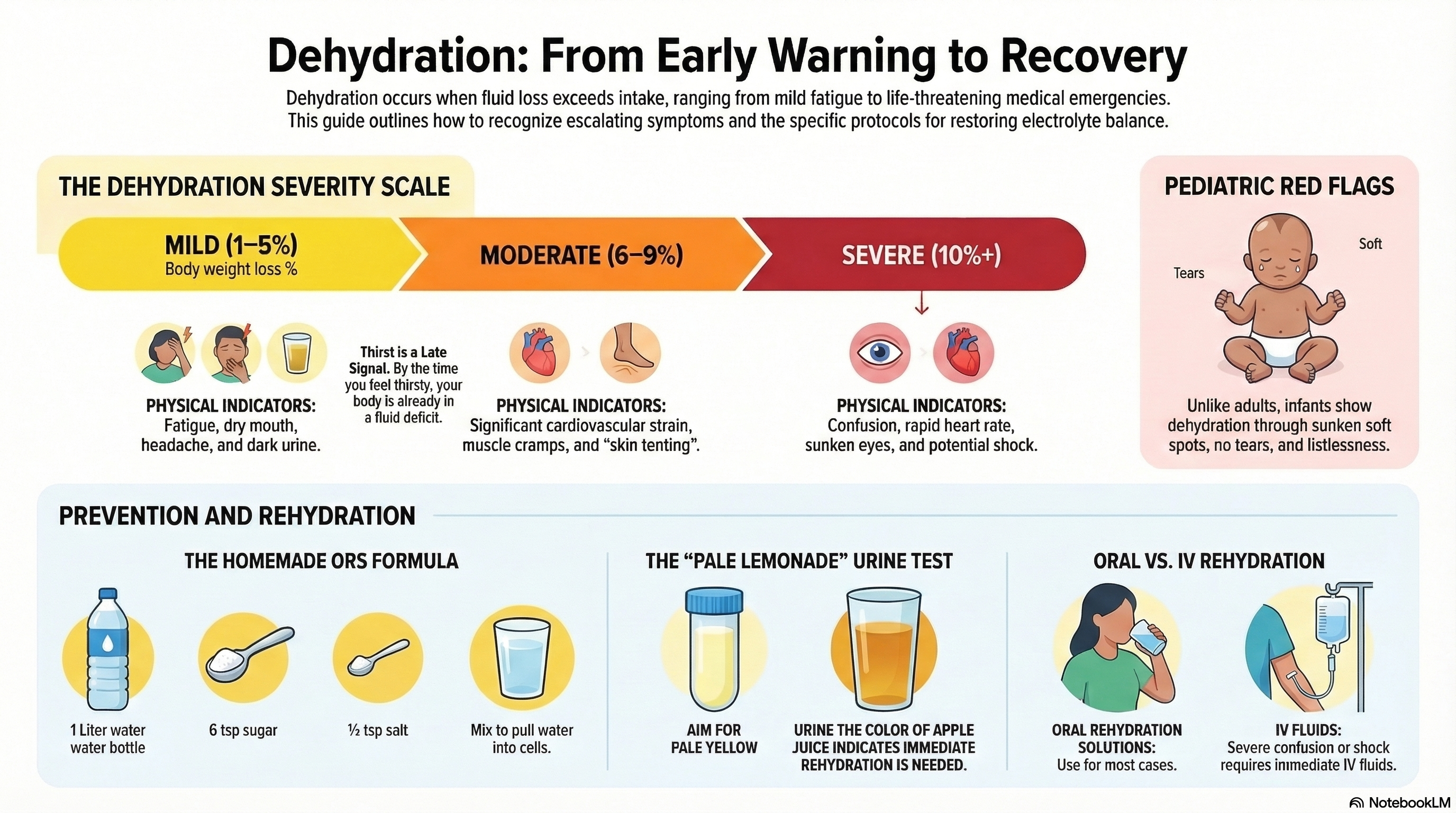
Dehydration is categorized by how much body weight is lost through fluids:
-
Mild (1–5% loss): Causes fatigue and minor physical symptoms.
-
Moderate (6–9% loss): Leads to significant cardiovascular strain and dry mucous membranes.
-
Severe (10% or more loss): A medical emergency that causes confusion, rapid heart rate, and potential shock.
Because water is essential for the health of your cells, severe dehydration can cause the brain to actually shrink slightly as it loses water to the bloodstream, which is why neurological symptoms like irritability and confusion are so common in advanced cases.
Causes of Dehydration
Dehydration happens whenever water output exceeds water intake. Common triggers include:
-
Illness: Diarrhea is the leading cause of severe dehydration worldwide, particularly in children. Vomiting and high fevers also contribute significantly to fluid loss.
-
Sweating: Intense exercise, hot weather, or working in high-heat environments without adequate breaks.
-
Increased Urination: This can be caused by uncontrolled diabetes, alcohol consumption (which blocks the hormone that helps you retain water), or certain medications like diuretics.
-
Reduced Intake: Infants, the elderly, or those who are ill may lose the ability to sense thirst or physically be unable to reach for a drink.
-
Severe Burns: Skin damage allows fluid to leak out of the body more easily.
Symptoms of Dehydration
Symptoms progress as the body loses more water. It is important to note that thirst is a late sign of dehydration; by the time you feel thirsty, your body is already lacking fluid.
In Adults:
-
Mild to Moderate: Dry or sticky mouth, dark yellow urine, headache, muscle cramps, and "skin tenting" (when skin is pinched and stays up briefly).
-
Severe: Extreme thirst, very dark or no urine, sunken eyes, rapid heartbeat, low blood pressure, and confusion or delirium.
In Infants and Children: Children are at much higher risk because they have a higher percentage of body water. Look for:
-
No wet diapers for 3+ hours.
-
No tears when crying.
-
A sunken "soft spot" (fontanelle) on the top of the head.
-
Sunken eyes or cheeks.
-
Listlessness or unusual irritability.
Diagnosis of Dehydration
Healthcare providers typically diagnose dehydration through a physical exam and a review of recent health history.
-
Physical Checks: Doctors look for dry mucous membranes (inside the mouth), check "capillary refill" (how fast color returns to your fingernail after a squeeze), and test skin elasticity.
-
Vital Signs: A drop in blood pressure when you stand up (orthostatic hypotension) and a rapid heart rate are key indicators.
-
Laboratory Tests: In severe cases, blood tests for plasma osmolality (the "gold standard" for measuring water deficit) or checking kidney function (BUN/creatinine ratio) are used to determine the severity and the specific type of electrolyte imbalance.
-
Urine Analysis: Doctors check for high "specific gravity," which indicates that the urine is very concentrated because the kidneys are trying to save water.
Treatment of Dehydration
The goal of treatment is to replace lost fluids and electrolytes. The method depends on the severity of the condition.
-
Oral Rehydration Therapy (Mild to Moderate): For most cases, sipping fluids is sufficient. The best choice is an Oral Rehydration Solution (ORS) like Pedialyte or a homemade version (1 liter of water, 6 tsp sugar, and ½ tsp salt). These contain the precise ratio of salt and sugar needed to pull water into your system.
-
What to Avoid: Plain water alone is often not enough for moderate cases, especially in children, as it lacks electrolytes. Avoid soda, undiluted sports drinks, and alcohol.
-
IV Fluids (Severe): Severe dehydration requires immediate emergency care. Intravenous (IV) fluids are administered in a hospital setting to stabilize blood pressure and rehydrate the body quickly.
Prevention of Dehydration
Staying ahead of your body's fluid needs is the most effective way to prevent dehydration.
-
The Urine Color Test: Aim for a "pale lemonade" color. If your urine looks like apple juice or is darker, you need to drink more immediately.
-
Drink Proactively: Don't wait until you are thirsty. Drink 2–4 liters of fluid throughout the day, more if you are active or in a hot climate.
-
Water-Rich Foods: Incorporate fruits and vegetables like watermelon, cucumbers, and oranges into your diet.
-
Manage Illness Early: At the first sign of vomiting or diarrhea, start small, frequent sips of an oral rehydration solution rather than plain water.
-
Athlete Recovery: Weigh yourself before and after exercise; for every pound lost, drink about 16–24 ounces of fluid to recover.