








What is Cushing Syndrome?
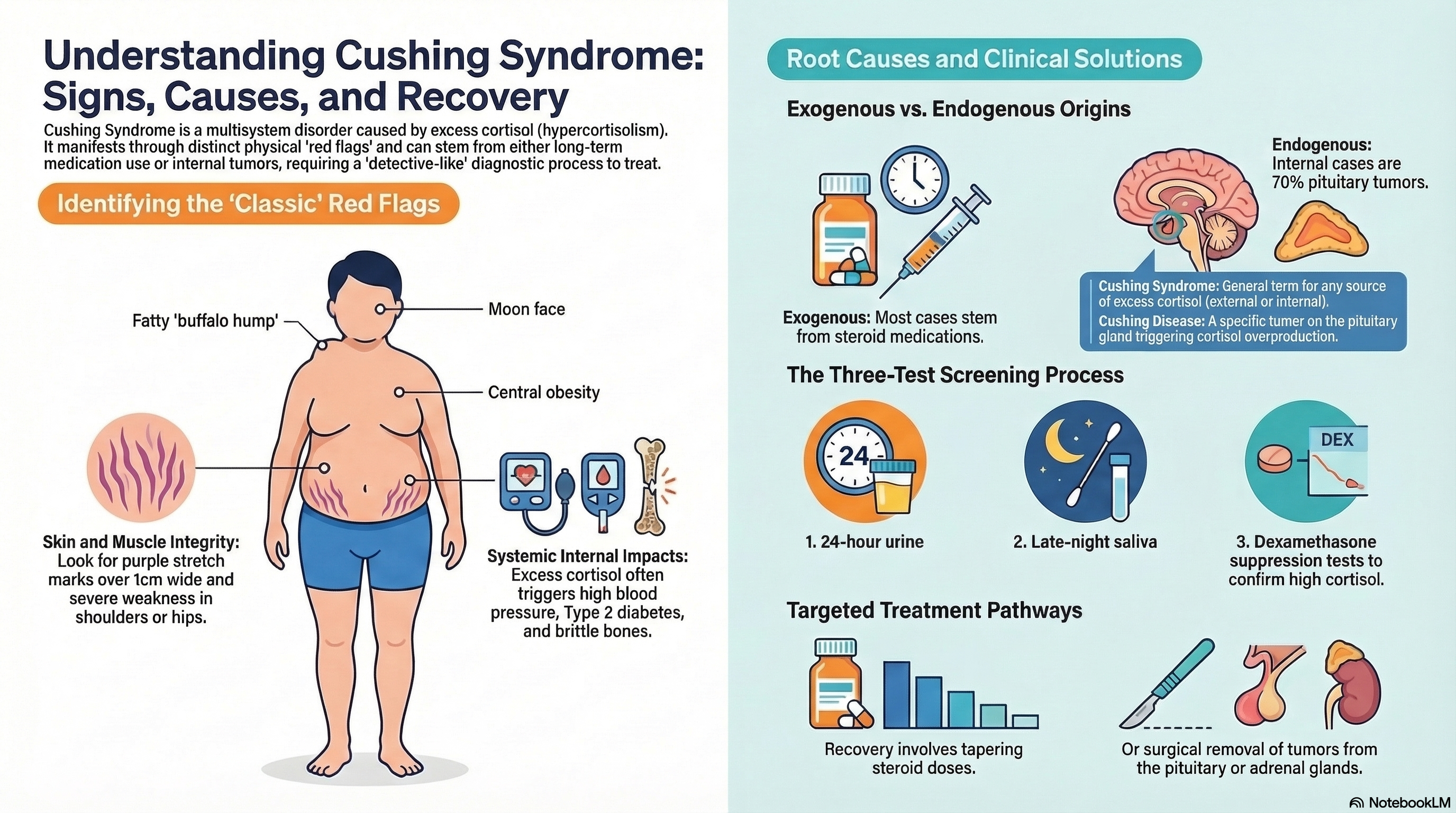
Cushing syndrome refers to the state of having "hypercortisolism" (excess cortisol). It is a multisystem disorder, meaning it affects your skin, bones, heart, and even your mood.
A common point of confusion is the difference between Cushing Syndrome and Cushing Disease:
-
Cushing Syndrome: The general term for any condition that causes high cortisol.
-
Cushing Disease: A specific type of Cushing syndrome caused by a non-cancerous tumor on the pituitary gland (located at the base of the brain). This tumor signals the adrenal glands to overproduce cortisol.
Causes of Cushing Syndrome
There are two ways your body can end up with too much cortisol: from outside sources or from within your own body.
-
Exogenous (Outside) Causes: This is the most common cause overall. It happens when people take high doses of corticosteroid medications (like Prednisone) for a long time to treat other conditions, such as asthma, rheumatoid arthritis, or lupus.
-
Endogenous (Inside) Causes: This is when your body produces too much cortisol on its own.
-
Pituitary Tumors: About 70% of internal cases are caused by a pituitary tumor (Cushing Disease).
-
Adrenal Tumors: A tumor on the adrenal glands (located on top of your kidneys) can pump out cortisol directly.
-
Ectopic Tumors: Occasionally, a tumor elsewhere in the body (most commonly in the lungs) can start producing the hormone that tells the adrenal glands to make cortisol.
-
Symptoms of Cushing Syndrome
Symptoms of Cushing syndrome can vary, but there are several "classic" signs that help doctors distinguish it from simple weight gain or other metabolic issues.
The "Classic" Physical Signs:
-
Central Obesity: Weight gain specifically around the midsection, while the arms and legs remain thin.
-
Moon Face: A rounded, full, and often reddish appearance of the face.
-
Buffalo Hump: A fatty hump between the shoulders at the base of the neck.
-
Purple Striae: Deep purple or reddish stretch marks, usually wider than 1 cm, appearing on the abdomen, thighs, or breasts.
-
Thin, Fragile Skin: Skin that bruises easily and heals very slowly.
Other Systemic Symptoms:
-
Muscles and Bones: Severe weakness in the shoulders and hips (difficulty getting out of a chair) and brittle bones (osteoporosis).
-
Mood and Mind: Depression, anxiety, irritability, and "brain fog."
-
Metabolic: High blood pressure and high blood sugar (Type 2 Diabetes).
-
Reproductive: Irregular periods in women and decreased fertility or libido in men.
Diagnosis of Cushing Syndrome
Diagnosing Cushing syndrome is often a "detective process" because the symptoms can overlap with other common conditions like obesity or PCOS.
-
Screening Tests: Doctors use three main tests to see if your cortisol levels are high:
-
24-Hour Urine Test: Measuring the total amount of cortisol produced in a full day.
-
Late-Night Salivary Test: Checking cortisol levels at midnight (when they should be at their lowest).
-
Dexamethasone Suppression Test: You take a pill at night, and your blood is tested the next morning to see if your body suppressed its own cortisol production.
-
-
Finding the Source: Once high cortisol is confirmed, your doctor will measure ACTH (a messenger hormone) in your blood.
-
Low ACTH points to a problem with the adrenal glands.
-
High ACTH points to a problem with the pituitary gland or an ectopic tumor.
-
-
Imaging: Once the source is narrowed down, you will likely have an MRI of your brain or a CT scan of your abdomen or chest to locate the tumor.
Treatment of Cushing Syndrome
The goal of treatment is to lower the level of cortisol in your body. The choice of treatment depends on the cause.
-
Adjusting Steroid Use: If the cause is medication, your doctor will slowly and carefully lower your dose. Never stop taking these medications abruptly, as this can cause a life-threatening drop in blood pressure.
-
Surgery: For tumors, surgery is usually the first choice.
-
Pituitary Surgery: A specialized neurosurgeon removes the tumor through the nose.
-
Adrenal Surgery: Removing one or both adrenal glands.
-
-
Medication: If surgery isn't an option or didn't fully work, drugs like ketoconazole or metyrapone can be used to "block" the production of cortisol.
-
Radiation: Used for pituitary tumors that cannot be fully removed by surgery.
Prevention of Cushing Syndrome
While you cannot prevent tumors from developing, you can reduce your risk of the most common form of the condition.
-
Monitor Steroid Use: If you require corticosteroid medications for a chronic condition, work closely with your doctor to use the lowest effective dose for the shortest possible time.
-
Routine Check-ups: If you are on long-term steroids, be vigilant for signs of weight gain or skin changes and report them to your doctor early.
-
Early Detection: If you notice a combination of the "classic" signs (like purple stretch marks and muscle weakness), seek a medical evaluation. Early treatment can prevent permanent damage to your bones and heart.