






What is Cholesterol?
Because cholesterol is fat-like, it cannot travel through your watery blood on its own. Instead, it hitches a ride inside "packages" called lipoproteins. Understanding these carriers is the key to understanding your heart health:
-
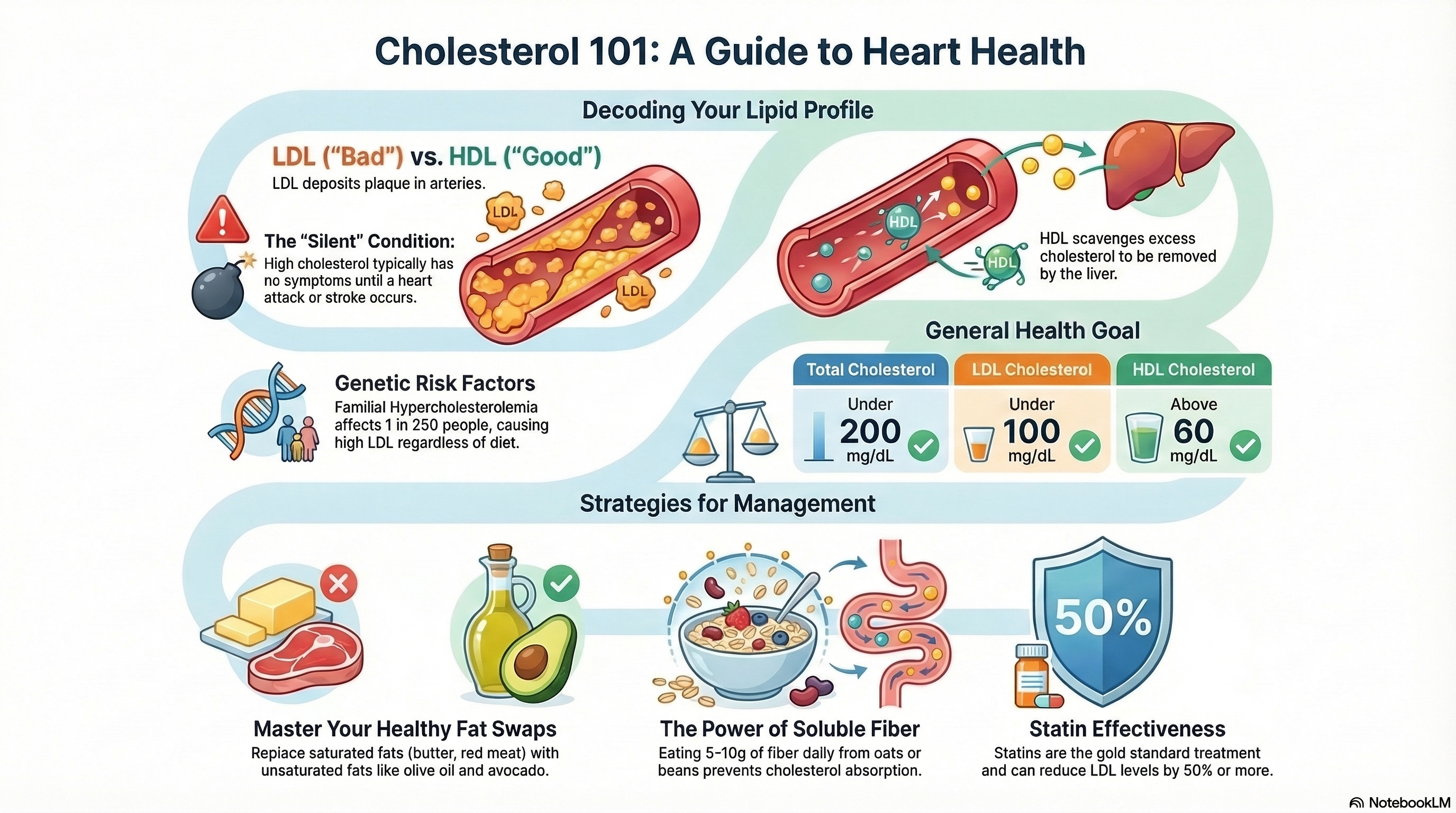
LDL (Low-Density Lipoprotein): Known as "Bad" cholesterol. It carries cholesterol to your tissues. When there is too much, it deposits in the walls of your arteries, forming hard plaques.
-
HDL (High-Density Lipoprotein): Known as "Good" cholesterol. It acts as a scavenger, picking up excess cholesterol from the arteries and hauling it back to the liver to be removed.
-
VLDL and Triglycerides: These are other types of blood fats. VLDL carries triglycerides (stored energy), and high levels of both are linked to a higher risk of heart disease and pancreatitis.
-
Non-HDL Cholesterol: This is your Total Cholesterol minus your "Good" HDL. Experts now consider this one of the most accurate predictors of cardiovascular risk.
Causes of High Cholesterol
Elevated cholesterol levels result from a mix of things you can control and things you cannot.
-
Genetics: This is often the most significant factor. Familial Hypercholesterolemia (FH) is a genetic condition affecting 1 in 250 people that causes extremely high LDL levels from birth, regardless of diet or exercise.
-
Dietary Choices: Consuming high amounts of saturated fats (found in red meat, butter, and coconut oil) signals your liver to produce more cholesterol.
-
Lifestyle Factors: Lack of physical activity lowers your "good" HDL, while smoking and obesity are linked to higher "bad" LDL and triglycerides.
-
Medical Conditions: Issues like an underactive thyroid (hypothyroidism), chronic kidney disease, and poorly managed diabetes can cause cholesterol levels to skyrocket.
Symptoms of High Cholesterol
High cholesterol is a "silent" condition because it has no symptoms. You cannot feel your arteries clogging. Most people only discover they have a problem during a routine blood test or, unfortunately, after experiencing a heart attack or stroke.
In very rare, severe genetic cases, you might see physical signs:
-
Xanthelasma: Yellowish fatty deposits on the eyelids.
-
Corneal Arcus: A white or gray ring around the iris of the eye (especially if you are under age 45).
-
Xanthomas: Fatty lumps on the knuckles or the Achilles tendons.
Diagnosis of High Cholesterol
Diagnosis is done through a simple blood test called a Lipid Panel. As of 2026, many labs no longer require you to fast before this test unless your triglycerides are known to be very high.
What the numbers mean (General Goals):
-
Total Cholesterol: Under 200 mg/dL.
-
LDL-C: Under 100 mg/dL (or under 55-70 mg/dL if you have existing heart disease).
-
HDL-C: Above 60 mg/dL (protective).
-
Triglycerides: Under 150 mg/dL.
-
ApoB: Increasingly used by specialists, this measures the total number of "bad" particles in your blood.
Treatment of Cholesterol
Modern treatment follows a "lower is better" philosophy. If lifestyle changes aren't enough, several highly effective medications are available.
-
Statins: The gold standard for treatment. They block the enzyme in your liver that makes cholesterol and can reduce LDL by 50% or more.
-
Ezetimibe: A pill that prevents your intestines from absorbing cholesterol from food.
-
PCSK9 Inhibitors: Advanced, injectable medications (like Repatha or Leqvio) that dramatically lower LDL, often by an additional 60% in patients who are already on statins.
-
Bempedoic Acid: An alternative for patients who cannot tolerate statins due to muscle aches.
-
Emerging Therapies: New "siRNA" drugs are now being used to target specific genetic risk factors like Lp(a), which were previously untreatable.
Prevention of High Cholesterol
While you can't change your genetics, you can significantly influence your cholesterol levels through daily habits.
-
Swap Your Fats: Replace saturated fats (butter, lard, fatty meats) with unsaturated fats like olive oil, avocado, nuts, and fatty fish (salmon/sardines).
-
Boost Soluble Fiber: Eating 5–10 grams of soluble fiber daily (found in oats, beans, and psyllium husk) can lower LDL by preventing it from being absorbed into your bloodstream.
-
Move More: Exercise is the best way to raise your "good" HDL and lower your triglycerides.
-
Weight Management: Even a modest 5-10% weight loss can lead to a significant drop in LDL levels.
-
Quit Smoking: Stopping tobacco use can raise your "good" HDL by as much as 10 mg/dL almost immediately.