







What is a Canker Sore?
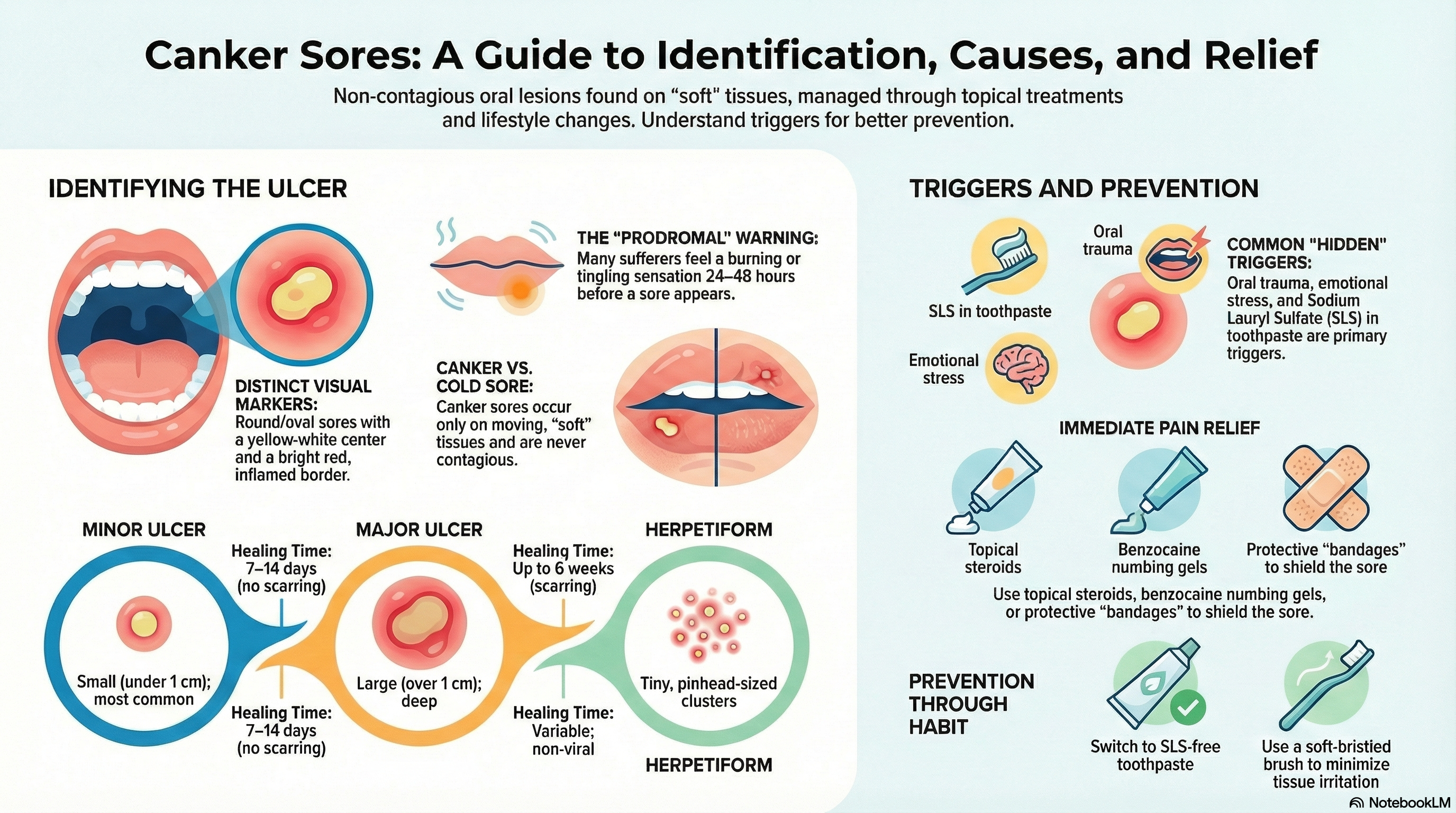
A canker sore is a small, shallow lesion that develops on the "soft" or non-keratinized tissues of your mouth—such as the inside of your lips, cheeks, or under the tongue. They typically appear as round or oval spots with a white, gray, or yellow center surrounded by a bright red, inflamed border.
Doctors classify them into three categories:
-
Minor Ulcers (Most Common): These are small (under 1 cm) and heal within 7–14 days without leaving a scar.
-
Major Ulcers: These are larger than 1 cm, much deeper, and can take up to six weeks to heal, often leaving a permanent scar.
-
Herpetiform Ulcers: These are tiny, pinhead-sized sores that occur in large clusters. Despite the name, they are not related to the herpes virus.
Causes of Canker Sores
The exact cause of canker sores remains a mystery, but they are considered "multifactorial," meaning they are triggered by a combination of genetics and environment.
-
Genetics: Approximately 40% of people who get frequent canker sores have a family history of them.
-
Oral Trauma: Minor injuries from cheek biting, aggressive toothbrushing, or dental work are the most frequent immediate triggers.
-
Sodium Lauryl Sulfate (SLS): This common foaming agent found in many toothpastes can irritate the delicate lining of the mouth. Switching to SLS-free toothpaste reduces the frequency of ulcers for many sufferers.
-
Nutritional Deficiencies: Low levels of Iron, Vitamin B12, Folate, or Zinc are found in up to 20% of frequent sufferers.
-
Stress and Hormones: Emotional stress and hormonal fluctuations (such as those during a menstrual cycle) are well-documented triggers.
-
Systemic Health: In some cases, recurrent sores are a sign of an underlying condition like Celiac disease, Crohn’s disease, or Behçet’s disease.
Symptoms of Canker Sores
Canker sores are easily identified by their appearance and the specific type of pain they cause.
-
Burning or Tingling: Many people feel a "prodromal" tingling or burning sensation 24 to 48 hours before the sore actually appears.
-
Pain: The pain is often described as "sharp" or "glass-like," particularly when the sore is touched by acidic, spicy, or salty foods.
-
Appearance: A round, depressed ulcer with a yellow-white fibrin layer (the "scab" of the mouth) and a red halo.
-
Location: They occur on the "moving" parts of the mouth. If you have a sore on the roof of your mouth or the top of your gums, it is more likely a cold sore or a different type of infection.
Diagnosis of Canker Sores
A diagnosis is usually made through a simple visual inspection by a doctor or dentist.
-
Clinical Exam: Your provider will look at the location and appearance of the ulcer. They will also ask about your history of recurrences.
-
Laboratory Tests: If you get sores frequently (more than 4–6 times a year) or if they appear for the first time after age 40, your doctor may order blood tests to check for vitamin deficiencies or markers of inflammatory diseases.
-
Differential Diagnosis: It is important to distinguish canker sores from Cold Sores (which start as blisters and are contagious) or Oral Cancer (which often presents as a single, non-healing ulcer that lasts longer than 4 weeks).
Treatment of Canker Sores
Because there is no "cure" for canker sores, treatment focuses on reducing pain and shortening healing time.
-
Topical Steroids: Prescription pastes or rinses (like triamcinolone or dexamethasone) are the most effective way to reduce inflammation and speed up healing.
-
Numbing Agents: Over-the-counter gels containing benzocaine or lidocaine provide temporary "numbing" for relief during meals.
-
Protective "Bandages": Products like Canker-X form a physical barrier over the sore to protect it from irritation.
-
Cautery: In a dental office, treatments like silver nitrate or specialized lasers can "cauterize" the nerve endings, providing instant pain relief and faster recovery.
-
Home Rinses: Rinsing with salt water or baking soda water helps keep the area clean and may soothe the tissue.
Prevention of Canker Sores
If you are a frequent sufferer, prevention is the most effective long-term strategy.
-
Switch Your Toothpaste: This is the most successful intervention for many. Look for labels that specifically say "SLS-Free."
-
Mind Your Diet: Avoid "sharp" foods like crusty bread or chips that can scratch the mouth, and limit highly acidic fruits like pineapple and citrus if they seem to trigger your sores.
-
Address Deficiencies: Ask your doctor to check your Vitamin B12 and Iron levels; correcting even a minor deficiency can stop the cycle of sores.
-
Manage Stress: Since stress is a major trigger, practicing mindfulness or ensuring adequate sleep can help stabilize your immune response.
-
Gentle Oral Care: Use a soft-bristled toothbrush to minimize accidental trauma to the gums and cheeks.