




What is Anemia?
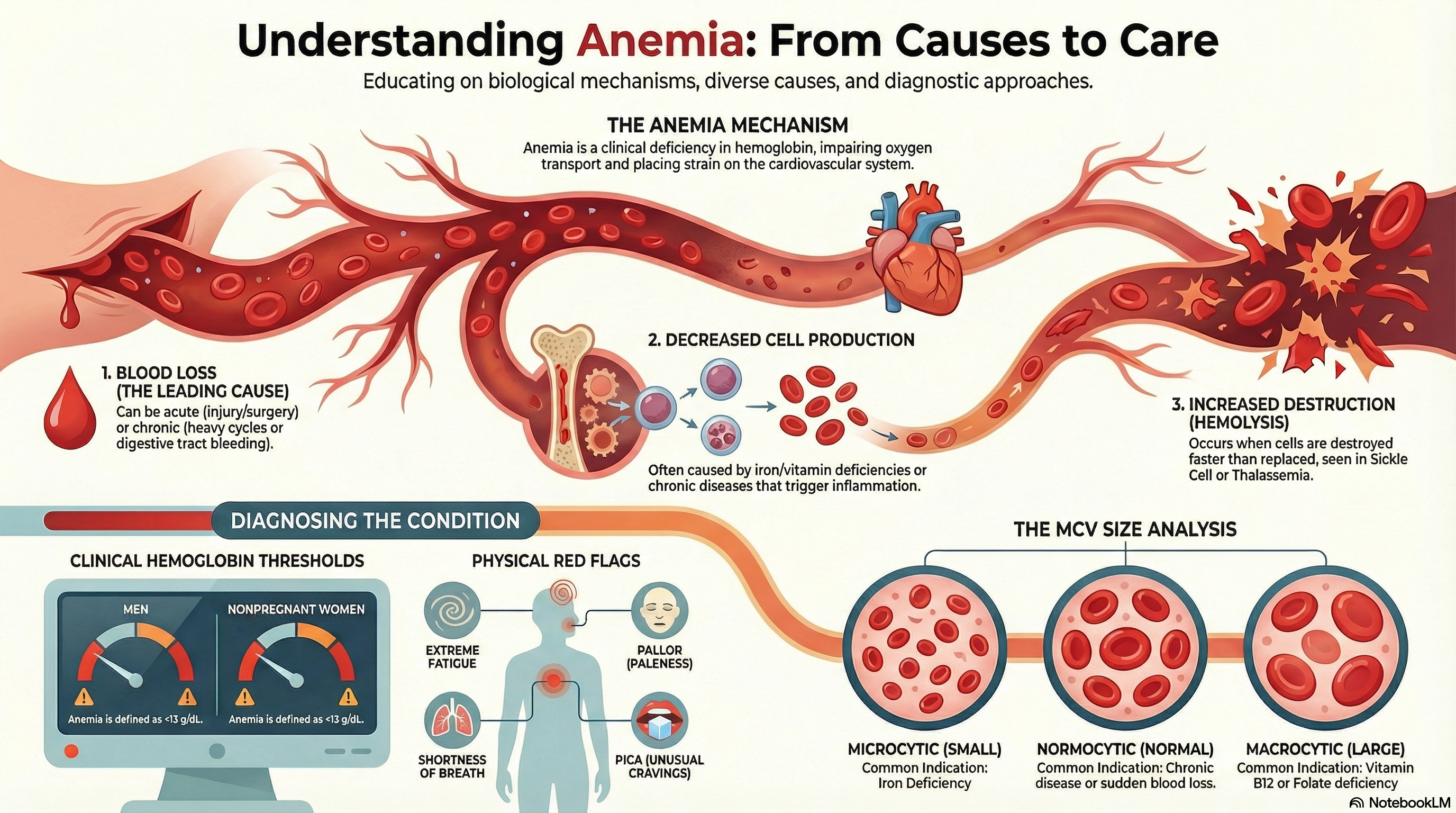
Red blood cells are produced in your bone marrow and typically live for about 120 days. Their primary job is to transport oxygen using hemoglobin. Anemia is clinically defined by hemoglobin levels falling below specific thresholds: generally <13 g/dL for men and <12 g/dL for nonpregnant women.
When you are anemic, your heart must work harder to pump the limited amount of oxygen through your body. This can place significant strain on your cardiovascular system and lead to a wide range of physical and cognitive symptoms.
Causes of Anemia
Anemia is generally grouped into three main categories based on why the red blood cell count is low.
Blood Loss This is the most common cause of iron deficiency. It can be acute (sudden), such as from a major injury or surgery, or chronic (slow and long-term), such as from heavy menstrual periods or slow bleeding in the digestive tract caused by ulcers or certain cancers.
Decreased Red Blood Cell Production Your body may not be able to create enough cells, or the cells it makes may be "faulty."
-
Iron Deficiency: The most common nutritional cause globally. Without iron, your body cannot make hemoglobin.
-
Vitamin Deficiency: A lack of B12 or Folate leads to "megaloblastic" anemia, where cells are too large and immature to work.
-
Chronic Disease: Conditions like kidney disease, cancer, or autoimmune disorders trigger inflammation that prevents the body from using stored iron or producing new cells.
-
Bone Marrow Issues: Aplastic anemia or leukemia can stop the production of all types of blood cells.
Increased Red Blood Cell Destruction (Hemolysis) This occurs when red blood cells are destroyed faster than they can be replaced. This can be inherited, such as Sickle Cell Anemia (where cells are shaped like crescents and get stuck in vessels) or Thalassemia, or it can be acquired through autoimmune disorders where the body attacks its own blood.
Symptoms of Anemia
Symptoms can be subtle at first but often worsen as the condition progresses. They are primarily the result of your organs struggling to function with less oxygen.
-
Extreme Fatigue and Weakness: The most common sign, often making daily tasks feel overwhelming.
-
Skin Changes: Pallor (paleness) of the skin, nail beds, or the inside of the lower eyelids. Jaundice (yellowing) may occur in certain types of anemia.
-
Heart and Lung Issues: Shortness of breath (especially during exercise), chest pain, and a rapid or irregular heartbeat.
-
Neurological Signs: Dizziness, lightheadedness, headaches, and "brain fog" or difficulty concentrating.
-
Pica: An unusual craving for non-food items like ice, dirt, or paper, which is a classic sign of severe iron deficiency.
-
Physical Deformities: Brittle, spoon-shaped nails (koilonychia) or cold hands and feet.
Diagnosis of Anemia
A diagnosis usually begins with a physical exam and a review of your family history and diet. To pinpoint the cause, doctors rely on several key laboratory tests.
The Complete Blood Count (CBC) This is the foundational test. It measures your hemoglobin and hematocrit levels. A crucial part of the CBC is the Mean Corpuscular Volume (MCV), which measures the size of your red blood cells:
-
Microcytic (Small cells): Usually indicates iron deficiency.
-
Normocytic (Normal size): Often suggests chronic disease or sudden blood loss.
-
Macrocytic (Large cells): Often points to Vitamin B12 or Folate deficiency.
Additional Testing
-
Iron Studies: Checking your Ferritin levels (stored iron). A level below 30 ng/dL is a strong indicator of deficiency.
-
Reticulocyte Count: Measures "young" red blood cells to see if your bone marrow is attempting to fix the problem.
-
Peripheral Blood Smear: A microscopic look at the shape and color of your blood cells.
-
Internal Scans: If blood loss is suspected, your doctor may order an endoscopy or colonoscopy to check for hidden bleeding in the gut.
Treatment of Anemia
Treatment focuses on the specific cause rather than just the low blood count.
-
Nutritional Anemia: Supplements are the primary fix. This includes oral iron pills (best taken with Vitamin C to help absorption), B12 injections, or folic acid tablets.
-
Anemia of Chronic Disease: The priority is treating the underlying illness (like kidney disease). In some cases, synthetic hormones like erythropoietin (EPO) are given to tell the bone marrow to make more cells.
-
Severe or Life-Threatening Anemia: If the count is dangerously low, a blood transfusion may be necessary to quickly restore oxygen levels.
-
Genetic and Autoimmune Types: Treatments may include medications that suppress the immune system, bone marrow transplants, or medications like hydroxyurea for Sickle Cell Disease.
Prevention of Anemia
While you cannot prevent genetic types of anemia, you can significantly reduce your risk of nutritional and blood-loss-related types.
-
Dietary Awareness: Ensure your diet includes iron-rich foods (red meat, beans, lentils, and fortified cereals) and plenty of B12 and folate (found in leafy greens and citrus).
-
Absorption Support: Avoid drinking coffee or tea with meals, as these can block iron absorption. Instead, pair iron-rich foods with Vitamin C (like orange juice).
-
Monitor High-Risk Groups: Young children, pregnant women, and those with heavy menstrual cycles should have their blood levels checked regularly.
-
Prompt Treatment: Address gastrointestinal issues like ulcers or hemorrhoids quickly to prevent chronic, slow blood loss.
-
Chronic Disease Management: If you have an inflammatory condition like rheumatoid arthritis, staying on your prescribed treatment plan can help prevent the "anemia of chronic disease."